
The Most Valuable Gemstones Used in Luxury Jewelry: A Guide to Timeless Elegance
What makes a gemstone truly luxurious—its price, rarity, beauty, or something more?
In high-end jewelry, certain gemstones command exceptional value. Their allure lies not only in brilliance or rarity but also in heritage, symbolism, and masterful craftsmanship. These gems transcend mere decoration; they represent milestones, history, and enduring prestige.
This guide explores the world’s most valuable gemstones in luxury jewelry, delving into what makes each stone unique, historically significant, and sought-after by collectors, royalty, and fine jewelry houses. By the end, you will understand how these remarkable gemstones continue to shape the definition of timeless luxury.
Diamond: The King of Gemstones

File Name: https://img.freepik.com/premium-photo/faceted-diamond-with-light-effect_366165-4310.jpg
Diamonds have long symbolized power, strength, and eternal love. Formed deep within the Earth under intense heat and pressure, they take billions of years to create. Their unparalleled hardness—ranking 10 on the Mohs scale—makes them resistant to scratches, while their optical brilliance has become the benchmark for fine jewelry.
Historical significance: Diamonds have adorned royal crowns and ceremonial artifacts for centuries. The Koh-i-Noor and the Hope Diamond are legendary examples of how these stones have shaped cultural narratives and politics.
-
Highest-priced diamond: The Pink Star, a 59.60-carat fancy vivid pink diamond, sold for $71.2 million at a Sotheby’s auction in Hong Kong in April 2017, setting a world record for any gemstone sold at auction.
-
Why it’s valuable: Exceptional clarity, precise cut, carat weight, and the rarity of fancy colors such as blue or pink.
-
Luxury houses featuring diamonds: Cartier, Graff, Tiffany & Co., Harry Winston.
Insight: Fewer than 1% of mined diamonds are considered flawless by GIA standards. These rare stones, often from mines in Botswana, South Africa, and Canada, are the pinnacle of luxury.
Ruby: The Gem of Passion

Ruby’s fiery hue and unmatched brilliance make it one of the most desired gemstones in high jewelry. Composed of corundum (aluminum oxide) with trace chromium, rubies are celebrated for their intense red color—known as "pigeon blood red"—especially when originating from Myanmar.
Cultural symbolism: In many cultures, rubies are believed to bring protection and good fortune. Ancient warriors even embedded rubies into their armor, believing the stone made them invincible.
-
Most expensive ruby: The Sunrise Ruby (25.59 carats) fetched $30.4 million at Sotheby’s Geneva in 2015.
-
Why it’s valuable: Intense saturation, origin, and size over 5 carats, which are rarer than diamonds.
-
Luxury houses using rubies: Bvlgari, Van Cleef & Arpels, Chopard.
Insight: Burmese rubies with minimal inclusions and untreated clarity command premium prices, surpassing even top-quality diamonds per carat.
Emerald: The Stone of Nobility

File Name: https://www.visitswatvalley.com/images/Swat-Emerald-1536x1152.jpg
Emeralds, with their lush green hues, have captivated royalty and collectors since ancient times. Cleopatra was known for her obsession with emeralds, using them as symbols of fertility, power, and eternal life.
Geological origins: The finest emeralds hail from Colombia’s Muzo and Chivor mines, producing stones with unparalleled saturation and transparency.
-
Notable sale: Elizabeth Taylor’s 23.46-carat emerald and diamond brooch, designed by Bulgari, sold for $6.6 million at a Christie’s auction in 2011 as part of her legendary jewelry collection.
-
Why it’s valuable: Rich, vivid color, minimal visible inclusions, and untreated quality.
-
Luxury brands: Piaget, Chaumet, Boucheron.
Tip: Due to natural inclusions (known as "jardin"), expert cutting and clarity enhancement like light oiling are common. Untreated emeralds remain the ultimate collector’s prize.
Sapphire: The Royal Favorite

Sapphires are revered for their regal blue tones, although they can appear in nearly every color except red. Kashmir sapphires are the most treasured, known for their velvety, vivid blue hue.
Historical legacy: Sapphires have adorned the British crown jewels and symbolized wisdom and virtue. Princess Diana’s sapphire engagement ring, now worn by Princess Kate, cemented this gem’s status as an icon of royal jewelry.
-
Major sale: A 392.52-carat Sri Lankan sapphire, known as 'The Blue Belle of Asia,' sold for $17.3 million at a Christie’s Geneva auction in 2014, setting a world record for a sapphire at that time.
-
Why it’s valuable: Rare origin, depth of color, and clarity.
-
Designers using sapphires: Dior Joaillerie, Chaumet, Buccellati.
Insight: Star sapphires, exhibiting a unique asterism due to rutile inclusions, are also highly prized in luxury markets.
Alexandrite: The Magical Color-Changer

File Name: https://htpgemstones.com/blogs/wp-content/uploads/2024/06/Untitled-124680.jpg
Alexandrite is a fascinating gemstone that shifts color depending on the light—green in daylight and reddish-purple under incandescent lighting. Its discovery in the Ural Mountains of Russia in the 1830s coincided with the reign of Tsar Alexander II, hence its name.
Rarity factor: Fine alexandrite larger than one carat is exceptionally rare, making it a favorite among collectors.
-
Top auction: An 11.66-carat alexandrite sold for over $500,000 at Christie’s in 2016.
-
Why it’s valuable: Dramatic color change, clarity, and scarcity.
-
Jewelry houses: Bvlgari (limited editions), Oscar Heyman.
Trivia: Because of its dual colors, alexandrite symbolizes balance and adaptability.
Paraíba Tourmaline: The Neon Marvel

File Name: https://pbs.twimg.com/media/E2AQkXgXsAEqRfU.jpg
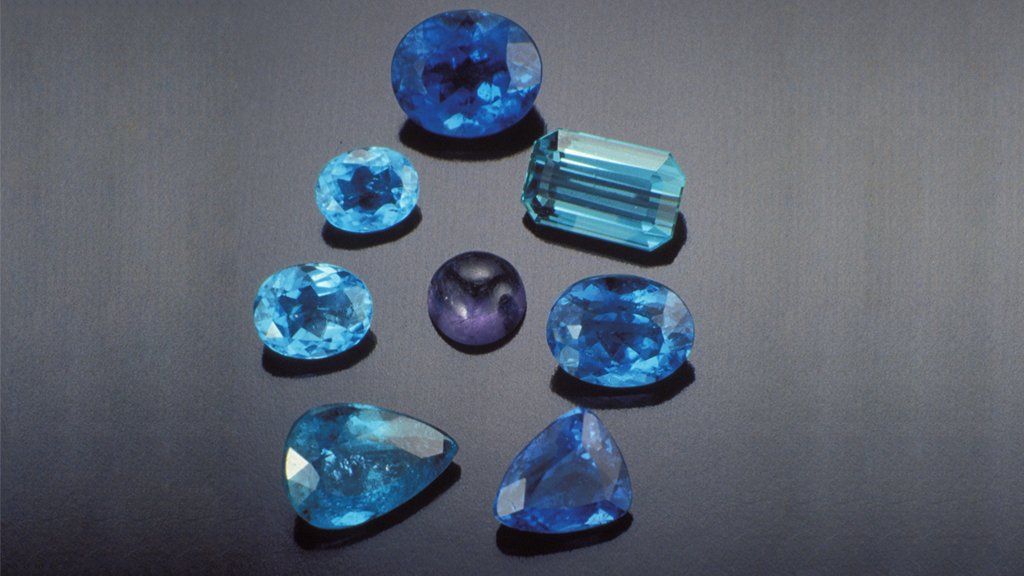
Few gemstones can rival the electric glow of Paraíba tourmaline. Discovered in the 1980s in Paraíba, Brazil, its vivid blues and greens are due to copper and manganese content.
Market surge: The rarity of true Brazilian Paraíba has caused its price per carat to skyrocket, sometimes surpassing $50,000 for exceptional stones.
-
Record price: A 191.87-carat Paraíba tourmaline, considered one of the largest known, was valued at over $25 million in total, though reports suggest this price was estimated rather than achieved through a public auction.
-
Why it’s valuable: Neon-like glow, extreme scarcity, and origin.
-
Featured by: Mikimoto, Tiffany & Co., Lorraine Schwartz.
Tip: African Paraíba stones, while beautiful, are less valuable than their Brazilian counterparts due to differences in chemical composition.
Jadeite: The Imperial Treasure

File Name: https://i.ytimg.com/vi/t30FX1Kl_YE/maxresdefault.jpg
Jadeite is deeply significant in Chinese culture, symbolizing purity, health, and longevity. It has been treasured for centuries as both a spiritual and aesthetic stone.
-
Highest sale: The Hutton-Mdivani jadeite necklace sold for $27.44 million at a Sotheby’s Hong Kong auction in 2014 to Cartier, the original designer of the piece.
-
Why it’s valuable: Rich, even color, translucency, and expert carving.
-
Used by: Wallace Chan, TTF Haute Joaillerie.
Cultural Note: Jadeite has historically been more valuable than gold in certain Asian markets due to its deep cultural resonance.
Spinel: The Hidden Star of High Jewelry

Once confused with rubies, spinel has gained its own recognition for brilliance and a wide range of hues, from hot pink to deep crimson.
Market resurgence: With more collectors appreciating spinel’s unique qualities, prices for fine stones have increased significantly.
-
Top sale: A 50.13-carat Burmese spinel sold for $1.47 million.
-
Why it’s valuable: Vibrant color, high clarity, and rarity.
-
Featured by: Hemmerle, Louis Vuitton, Belperron.
Fact: The famous “Black Prince’s Ruby” in the British crown jewels is actually a spinel.
Opal: The Gem of Fire and Fantasy

Opal is cherished for its iridescent play-of-color. Black opal from Lightning Ridge, Australia, is particularly valuable due to its dark background that enhances the rainbow flashes.
Formation: Opals form from silica-rich water seeping into rock crevices, creating a unique mosaic of color.
-
Most valuable opal: The "Olympic Australis" is worth over $2 million and weighs 17,000 carats.
-
Why it’s valuable: Unique color patterns, brilliance, and rarity.
-
Brands using opals: Dior, Cathy Waterman, Chaumet.
Myth: Ancient Romans believed opals brought good luck and contained the powers of all gemstones.
Pearl: Nature’s Classic Luxury



Pearls, though organic, are among the oldest gems in human adornment. Natural pearls form when a mollusk secretes layers of nacre around an irritant, a process that can take years.
Historic treasures: La Peregrina, owned by Elizabeth Taylor, is one of the most famous pearls in history.
-
Top pearl sale: La Peregrina fetched $11.8 million at a Christie’s auction in 2011.
-
Why it’s valuable: Natural origin, symmetry, high luster, and rarity.
-
Luxury brands: Mikimoto, Chanel, Tiffany & Co.
Note: Today, most pearls are cultured, but naturally occurring pearls are highly sought after and command astronomical prices.
What Makes These Gemstones So Valuable?
Several elements determine the value of luxury gemstones:
-
Rarity: Scarcity is key. Stones like alexandrite and Paraíba tourmaline are geological marvels.
-
Origin: Provenance can add immense value; for example, Kashmir sapphires are worth significantly more than similar stones from other regions.
-
Color: Vivid, pure hues are the most desirable.
-
Clarity: Fewer visible inclusions generally increase value.
-
Cut: A skilled cut maximizes brilliance and fire.
-
Treatment: Untreated stones are rarer and thus command premium prices.
Luxury Jewelry Trends and Investment Value
Luxury gemstones are not only cherished for beauty but also recognized as tangible assets. According to the 2024 Knight Frank Wealth Report:
-
The value of top-quality colored gemstones rose over 20% in the past decade.
-
Exceptional rubies and sapphires outperformed gold in some investment portfolios.
-
Demand from Asia, particularly China and India, continues to drive record-breaking auction prices.
Investment tip: Always seek gemstones with certifications from respected laboratories (GIA, SSEF, AGS). These certificates detail treatments and verify authenticity, ensuring long-term value.
FAQs About Luxury Gemstones
Q: What is the most expensive gemstone ever sold?
A: The Pink Star Diamond, at $71.2 million, holds the record.
Q: Are colored gemstones more valuable than diamonds?
A: In some cases, yes. Rare rubies, sapphires, and emeralds can surpass diamond prices per carat.
Q: How can I verify a gemstone’s authenticity?
A: Obtain a certificate from a gemological lab such as GIA or SSEF.
Q: Which gemstones offer the best investment potential?
A: Untreated Burmese rubies, Kashmir sapphires, Colombian emeralds, and Brazilian Paraíba tourmalines are among the top choices.
Q: Why are untreated stones more expensive?
A: Natural stones are rare, and their unenhanced qualities appeal strongly to serious collectors.
Conclusion
Luxury gemstones are more than dazzling adornments–they are embodiments of history, art, and enduring value. Each stone tells a story that spans cultures and centuries. Whether you are an avid collector or someone seeking a meaningful heirloom, understanding these exceptional gemstones can guide you toward investments that appreciate both in beauty and worth.
Because true luxury does not fade–it deepens, fascinates, and endures through every facet.